
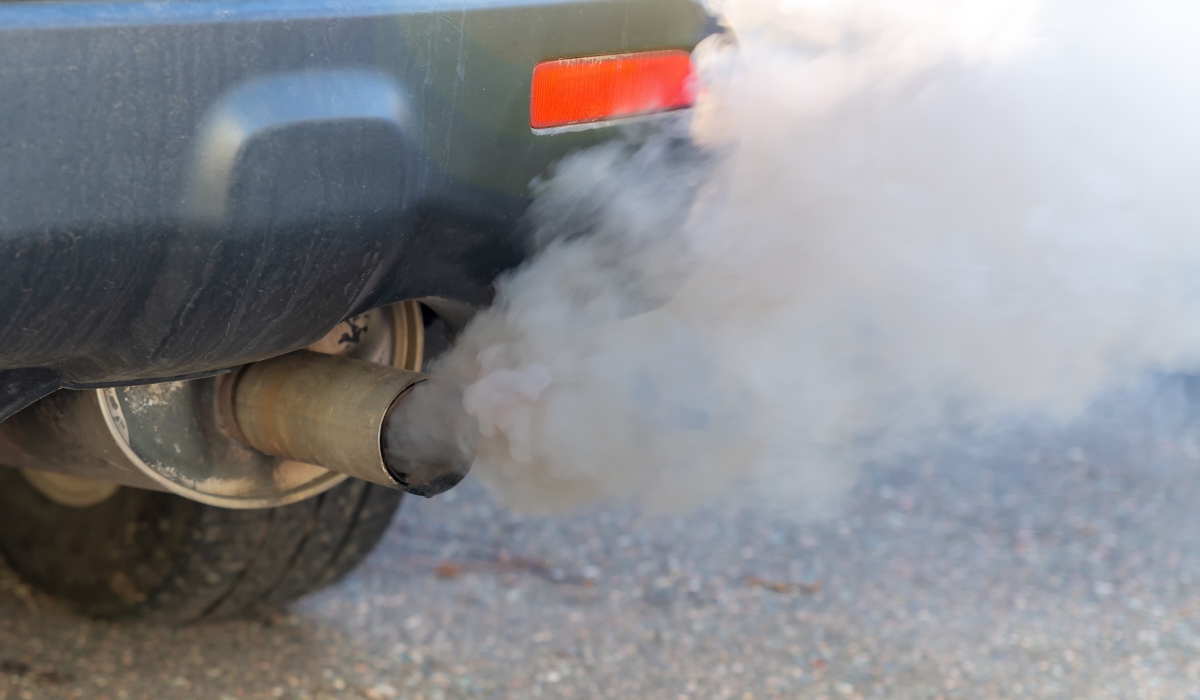
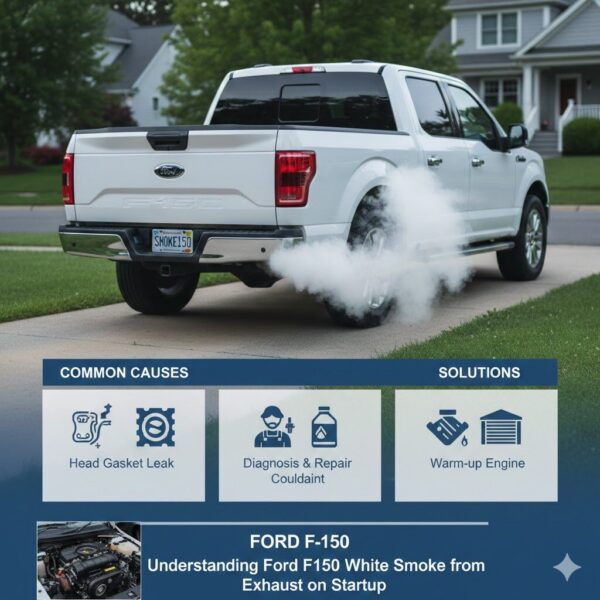
If you’ve spotted ford f150 white smoke from exhaust on startup, it can spark worry about your truck’s engine health. Many F-150 owners face this issue, especially in colder weather or with higher-mileage vehicles. This guide breaks down the reasons behind it, from simple fixes to deeper problems, drawing on real owner stories to help you troubleshoot like a pro.
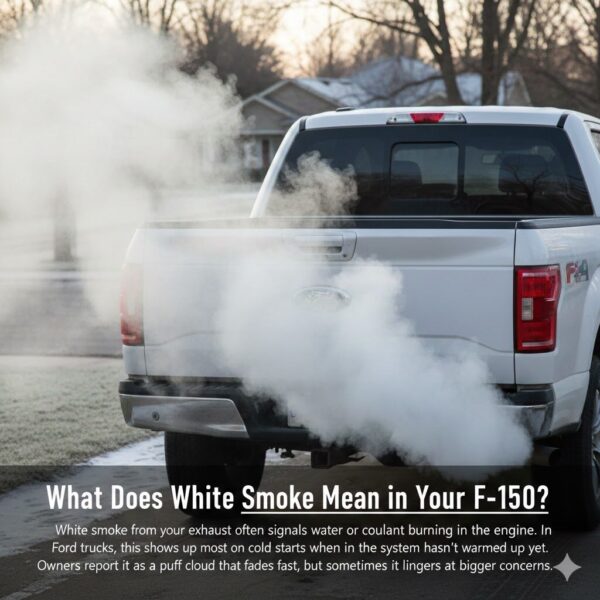
What Does White Smoke Mean in Your F-150?
White smoke from your exhaust often signals water or coolant burning in the engine. In Ford trucks, this shows up most on cold starts when the system hasn’t warmed up yet. Owners report it as a puff or cloud that fades fast, but sometimes it lingers, hinting at bigger concerns.
Common triggers include moisture buildup in the pipes, which is normal in humid or cold spots. But if it’s thick and sweet-smelling, watch out—it might point to coolant mixing with fuel. Ford F-150 exhaust smoke like this affects models from 2011 onward, with EcoBoost engines being prone due to their turbo setups.
Think about your truck’s age and miles. A 2016 model with 50,000 miles might just need a quick check, while a 2017 at 150,000 could face wear on seals. Always note if the smoke vanishes after a minute or sticks around during drives.
Possible Causes of Ford F150 White Smoke from Exhaust on Startup
Let’s dive into the main culprits. We’ll rank them by how often they pop up in owner forums and mechanic chats.
- Normal Condensation: This tops the list for harmless cases. When your F-150 sits overnight, water vapor collects in the exhaust. On startup, heat turns it to visible steam. It clears in under a minute and happens more in cool mornings. No fix needed—just drive on.
- Coolant Leaks: A cracked head gasket or damaged cylinder head lets coolant seep into the combustion chamber. Symptoms include low coolant levels without visible puddles. Check your reservoir; if it’s dropping, test for leaks. Blown head gasket symptoms often pair with this smoke, like rough idling or overheating.
- Oil Leaks from Turbo or Seals: In F-150 EcoBoost smoke cases, turbos can leak oil into the exhaust. This mixes with air for a whitish puff, sometimes bluish. Worn valve seals also allow oil to burn on cold starts. Look for oil drops under the truck or a burning smell.
- Fuel System Issues: Rich fuel mixtures from faulty injectors cause incomplete burns, leading to white smoke when engine cold. It might tie to a check engine light for misfires. Engine misfire F-150 owners often trace this to bad spark plugs or sensors.
- Worn Engine Parts: Over time, piston rings or cylinders wear, letting fluids mix. This is rare but hits high-mileage trucks. A compression test spots it early.
Other factors? Cold weather amps up cold start smoke F-150, as engines run richer to warm cats. If your truck’s a used buy, research these as Ford truck exhaust issues.
How to Diagnose White Smoke in Your F-150
Don’t panic—start with easy checks. Grab tools like a flashlight, rags, and a code reader. Follow these steps to pinpoint the problem.
- Inspect Fluids: Pop the hood and check coolant. Is it low? Look for milky oil on the dipstick, a sign of mixing. Top up if needed, but monitor for drops.
- Watch the Smoke: Note color, smell, and duration. Sweet scent? Coolant. Oily? Oil burning in turbo engines. Time it—if under 60 seconds and no other signs, it’s likely okay.
- Scan for Codes: Use an OBD-II scanner. Codes like P0300 (misfire) or P0420 (catalyst) link to F-150 startup smoke. Apps like Torque work great for DIY.
- Check Exhaust System: Feel for wet spots or residue at the tailpipe. In Ford F-150 engine smoke scenarios, this reveals buildup.
- Perform Tests: Do a leak-down or compression test at home or a shop. These measure seal integrity. For turbos, inspect lines for cracks.
Prospective buyers: During a test drive, cold-start the truck and observe. Ask about past repairs. This avoids surprises with F-150 engine problems.
Real talk from owners: One 2014 EcoBoost user saw smoke but no fluid loss, calling it “normal.” Another with a 2011 topped coolant once and fixed a gasket leak. Compare your symptoms to these.
Fixing Ford F150 White Smoke from Exhaust on Startup: Step-by-Step Guide
Once diagnosed, tackle the fix. We’ll cover DIY and pro options, with costs for U.S. shops.
For condensation in exhaust1:
- No action. Warm the engine fully on drives to burn it off.
For coolant issues:
- Replace Head Gasket: Costs $1,000–$2,500 at a shop. DIY? Possible with tools, but risky—follow Ford manuals.
- Seal Leaks: Use stop-leak additives temporarily, but get pro help for lasting fixes.
For turbo/oil problems:
- Swap Oil Supply Tube: Common in EcoBoost. Parts run $50–$100; labor $500–$1,200. Watch YouTube guides for steps.
- Valve Seal Replacement: $800–$1,500. Involves removing heads—best for mechanics.
For fuel glitches:
- Clean or replace injectors: $200–$600. Test spark plugs too; fouled ones cause engine valve seal problems.
Prevent repeats: Change oil every 5,000 miles, use Ford-spec coolant, and avoid short trips in cold. Stats show EcoBoost engines last 200,000+ miles with care, per owner surveys.
Warning: If ignoring leads to bigger woes, costs skyrocket. One forum poster spent $3,000 on an engine swap after delays. Act fast.
Common Issues in F-150 EcoBoost Models
EcoBoost trucks, like the 2.7L or 3.5L, shine for power but face unique smoke risks. Turbos heat fast, burning any leaked fluids. Turbo oil leak Ford F-150 hits models post-2015 often2.
Owners note: A 2017 at 159k miles puffed smoke daily, traced to a failing O-ring on the driver-side turbo. Fix? New tube with check valve. Ford’s TSB covers this, urging checks at 100k miles.
In cold climates, white smoke from Ford F-150 exhaust after sitting overnight is routine. But if it disappears yet returns, monitor turbos. Used buyers: EcoBoosts from 2011–2016 have higher rates, per reliability data from Consumer Reports.
Troubleshooting Tips from F-150 Communities
F-150 fans share gold on forums. Here’s curated advice:
- Post videos of your smoke for feedback—helps rule out normals.
- Join groups like F150Forum for model-specific chats.
- Avoid scams when shopping parts; check sites like 8443307185-1-8136693601 for number verification.
- For repair quotes, beware odd calls—see 4808037616-phone.
- If dealing with online buys, protect info with tips from protect-your-phone-number-online.
More: One Reddit user fixed a similar issue for $1,000 at a dealer. Another suggested monitoring after overnight sits.
Long-Tail Insights: Specific Scenarios
Wondering why is my Ford F-150 blowing white smoke on cold start? Often, it’s turbo weep after long sits. For Ford F-150 EcoBoost white smoke only on startup, check seals first.
Is white smoke from exhaust normal in an F-150? Yes, if brief. But for how to fix white smoke from F-150 exhaust on startup, start with fluids.
Ford F-150 head gasket leak symptoms white smoke: Includes loss and overheating. White smoke from Ford F-150 exhaust after sitting overnight: Common in humid areas.
F-150 white smoke cold starts but disappears: Likely safe. Use this Ford truck engine smoke troubleshooting guide for steps.
FAQ: Answering Your Top Questions
What if my ford f150 white smoke from exhaust on startup smells sweet?
Points to coolant—check for leaks ASAP.
How often does this hit EcoBoost?
About 10–15% of owners report it, per forums.
Can I drive with it?
If brief, yes. Persistent? No—risks damage.
Best tools for DIY?
A: Scanner, pressure tester, and basic wrenches.
spotting-and-reporting-phone-scams.
Conclusion: Keep Your F-150 Running Strong
In wrapping up, ford f150 white smoke from exhaust on startup often boils down to condensation or minor leaks, but quick checks save big headaches. Monitor fluids, test systems, and tap communities for tailored advice. With proper care, your truck stays reliable for years3.
What symptoms are you seeing in your F-150? Share below to get more tips.
References:
- Smoke on Startup – F150EcoBoost.net: Focuses on cold-weather normals, ranking well for targeted searches among EcoBoost owners. ↩︎
- White Smoke on Start Up – Reddit r/f150: Covers high-mileage fixes like turbo tubes, appealing to DIY mechanics in warm climates. ↩︎
- White Smoke on Startup – F150Forum: Details user stories on condensation vs. leaks in EcoBoost models, with high engagement from truck enthusiasts. ↩︎