
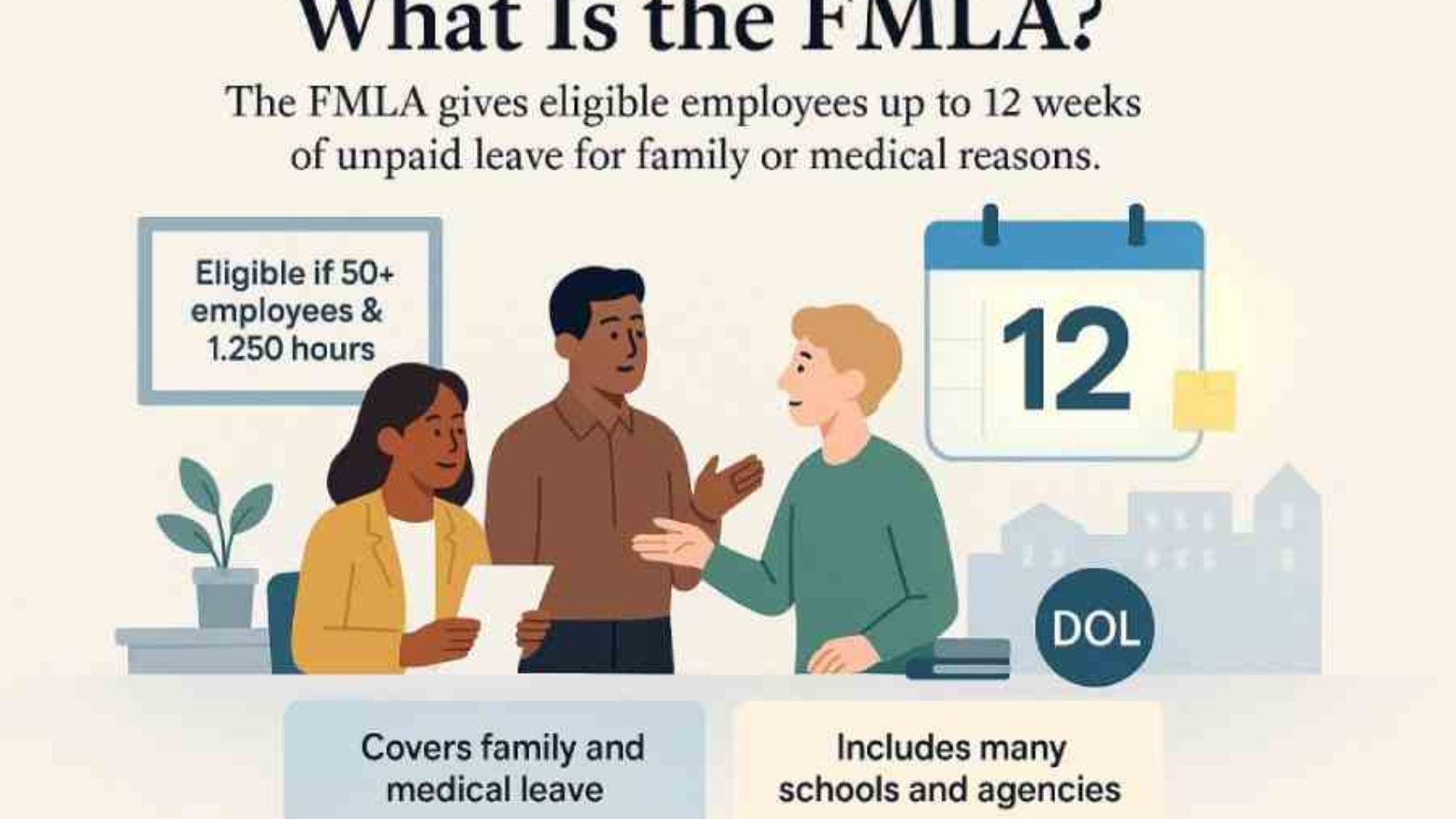
Navigating employee leave can feel overwhelming for small business owners. If you run a company with fewer than 50 workers, you might wonder about the fmla for small businesses under 50 employees. This federal law, known as the Family and Medical Leave Act, sets rules for unpaid time off. But it does not cover every employer. In this guide, we break down the basics, exemptions, and steps you can take. We aim to give you clear, practical advice to protect your business and support your team.
Understanding the Family and Medical Leave Act (FMLA)

Congress passed the FMLA in 1993. It helps workers balance job duties with family and health needs. The law lets eligible employees take unpaid leave without losing their jobs. Employers must keep health benefits going during this time.
The U.S. Department of Labor oversees FMLA. They enforce it through their Wage and Hour Division. Violations can lead to fines or lawsuits. But small businesses often escape these rules.
Key reasons for FMLA leave include:
- Birth or adoption of a child
- Caring for a family member with a serious health condition
- Dealing with your own serious health issue
- Handling military family emergencies
Leave lasts up to 12 weeks in a 12-month period. For military caregiver leave, it extends to 26 weeks. Workers can take it all at once or in parts, like intermittent fmla frequency and duration for ongoing treatments.
Does FMLA Apply to Small Businesses?

Many owners ask: “Does FMLA apply to employers with less than 50 employees?” The short answer is no, in most cases. Federal rules kick in only for larger companies.
To qualify as a covered employer, you need:
- At least 50 employees
- Those workers employed for 20 or more weeks in the current or previous year
- Employees within a 75-mile radius of the worksite
If your team stays below 50, you skip federal FMLA duties. This setup protects small operations from heavy burdens. For example, losing one worker for weeks could hurt a 10-person shop more than a big firm.
But watch for exceptions. Fmla rules for employers under 50 employees might still apply in special setups. Joint employment is one. If you share staff with another business, like through a staffing agency, combine your counts. If the total hits 50 or more, FMLA could cover you.
Integrated employers face similar issues. These are linked companies, like subsidiaries. Courts look at shared control, operations, and management. If combined, they count as one under FMLA.
Public agencies and schools follow FMLA regardless of size. Private small businesses get the exemption.
Employee Eligibility Under FMLA

Even if your business qualifies, not every worker does. Employees must meet these tests:
- Worked for you at least 12 months (not always consecutive)
- Logged at least 1,250 hours in the past year (about 24 hours per week)
- Based at a site with 50 or more employees within 75 miles
Calculating 1250 hours of FMLA eligibility counts paid time, like overtime. It skips unpaid leave or holidays. For salaried staff, assume they qualify unless you prove otherwise.
Use an fmla eligibility checklist to verify:
- Check employment length
- Review hours worked
- Confirm worksite radius
This keeps things fair and avoids disputes.
FMLA for Small Businesses Under 50 Employees: Exemptions and Options
As a small business owner, you gain freedom from federal mandates. No need to grant 12 weeks of unpaid leave. But that does not mean ignoring employee needs. Many choose to offer similar benefits voluntarily.
Why bother? It boosts morale and retention. Workers feel valued when you support family time or health recovery. Plus, it sets you apart in hiring.
If you opt in, follow FMLA basics:
- Provide job protection
- Continue health coverage (employee pays their share)
- Avoid retaliation for using leave
Document everything. Use fmla forms for requests and approvals. Free templates come from the Department of Labor website.
Remember, FMLA leave is paid or unpaid? It’s unpaid federally. But you can let workers use accrued paid time off during it. Compare this to short term disability vs fmla. Disability often pays part of wages for health issues, while FMLA focuses on job security.
One myth: There are no exceptions to an employee being able to take fmla leave for a child over the age of 18. Not true. Leave applies if the adult child has a serious health condition and cannot self-care.
State Laws and Small Business Obligations
Federal FMLA skips small businesses, but states fill gaps. Over a dozen have their own family leave laws. Some cover firms with as few as one employee.
For example:
- California: Paid Family Leave for businesses with one or more workers
- New York: Paid leave for most private employers
- Washington: Mandatory paid leave, even for under-50 firms
Check your state. Fmla guidelines for small companies vary. Some require paid time, shorter than 12 weeks. Others expand reasons, like domestic violence.
In joint setups, state rules might override federal exemptions. Consult a local HR expert or lawyer.
Handling Leave Requests in Small Businesses
Even without FMLA, handle requests wisely. Deny if needed, but explain why. Focus on business impact.
Steps to manage:
- Listen closely. Understand the need.
- Review policies. Check your handbook.
- Offer alternatives. Suggest flexible hours or remote work.
- Document decisions. Note reasons to avoid claims.
For health-related tasks, request medical notes carefully. Avoid privacy breaches.
If you deny, prepare for pushback. Workers might claim discrimination. Train managers on fair treatment.
Joint and Integrated Employment: Hidden Risks for Small Businesses
What types of businesses/employers does the fmla apply to? Beyond size, links matter.
Joint employment happens when two firms control one worker. Examples:
- Temp agencies and clients
- Franchises and corporate owners
- Contractors and subs
If combined employees are in the top 50, FMLA applies. The primary employer handles leave, but the secondary cannot interfere.
Integrated employers share:
- Common management
- Shared operations
- Centralized labor control
- Interrelated finances
Courts decide case by case. A small office might link to a larger parent company.
To check: Review contracts and daily ops. If unsure, get legal advice.
Voluntary FMLA-Like Policies for Small Businesses
Family medical leave act for companies under 50 employees is optional. But smart owners build their own.
Benefits:
- Attract talent
- Reduce turnover
- Build loyalty
Start simple:
- Offer 4-6 weeks unpaid leave
- Protect jobs
- Keep benefits
Tailor to your needs. A small business FMLA exemption lets you customize.
Share policies in handbooks. Train staff on use.
Common Myths About FMLA for Small Businesses
Myths confuse owners. Let’s clear them.
Myth 1: All businesses must offer FMLA.
Fact: Only 50+ qualify federally.
Myth 2: Leave is always paid.
Fact: Federal is unpaid; states may pay.
Myth 3: You can fire during leave.
Fact: Job protection applies if covered.
Myth 4: Fmla for small offices never applies.
Fact: Joint setups change that.
Myth 5: No forms needed.
Fact: Documentation protects everyone.
Best Practices for Compliance and Employee Support
Stay ahead with these tips:
- Post notices. Even if exempt, inform about rights.
- Train leaders. Teach fair handling.
- Use tools. Download fmla for small businesses under 50 employees pdf guides from DOL.
- Partner up. Work with HR firms for advice.
- Review yearly. Update for law changes.
These steps reassure your team and shield your business.
Real-World Examples for Small Business Owners

Consider a 40-person tech startup. An employee needs time for surgery. Without FMLA, the owner offers 8 weeks unpaid. Job waits upon return. This builds trust.
Or a 25-employee cafe. A worker shares duties with a partner firm. Combined, over 50. FMLA applies. They grant leave, avoiding fines.
In a 15-person shop, state law requires paid leave. The owner complies, using insurance to cover costs.
These show proactive steps pay off.
FAQs About FMLA for Small Businesses Under 50 Employees
Does fmla apply to employers with less than 50 employees?
No, federally. But check state rules or joint employment.
What is intermittent leave?
Time off in blocks, like for treatments. Track intermittent fmla frequency and duration carefully.
How do I calculate hours for eligibility?
Use payroll records for calculating 1250 hours fmla eligibility. Include overtime.
Where do I get forms?
DOL website offers free fmla forms.
Is FMLA paid?
Federal is fmla paid or unpaid—unpaid. States may differ.
Can I offer voluntary leave?
Yes, many do under fmla for small business owners.
Integrating Other Benefits with FMLA
Blend FMLA with other perks. Short term disability vs fmla: Disability pays for health absences; FMLA secures jobs.
Use an fmla eligibility checklist to align.
For kids over 18: No blanket exceptions. If disabled, there are no exceptions to an employee being able to take fmla leave for a child over the age of 18 if conditions apply.
Staying Updated on FMLA Changes
Laws evolve. In 2026, watch for updates. The DOL site tracks them.
Join business groups for alerts. Attend webinars.
References
- What are the Small Business FMLA Requirements? – Detailed checklist for compliance.
- What is FMLA? 4 FAQs Every Small Business Owner Should Know – Answers common questions for owners.
- What is FMLA – Explains basics and small business tips.
For more on business strategies, check A Deep Dive into Conversational Analytics Software: Optimizing Your Call Tracking Strategy.
In summary, fmla for small businesses under 50 employees often means exemption from federal rules. But consider state laws, joint setups, and voluntary options to support your team. This approach keeps operations smooth and employees happy. What leave policies work best in your small business? Share your thoughts below.